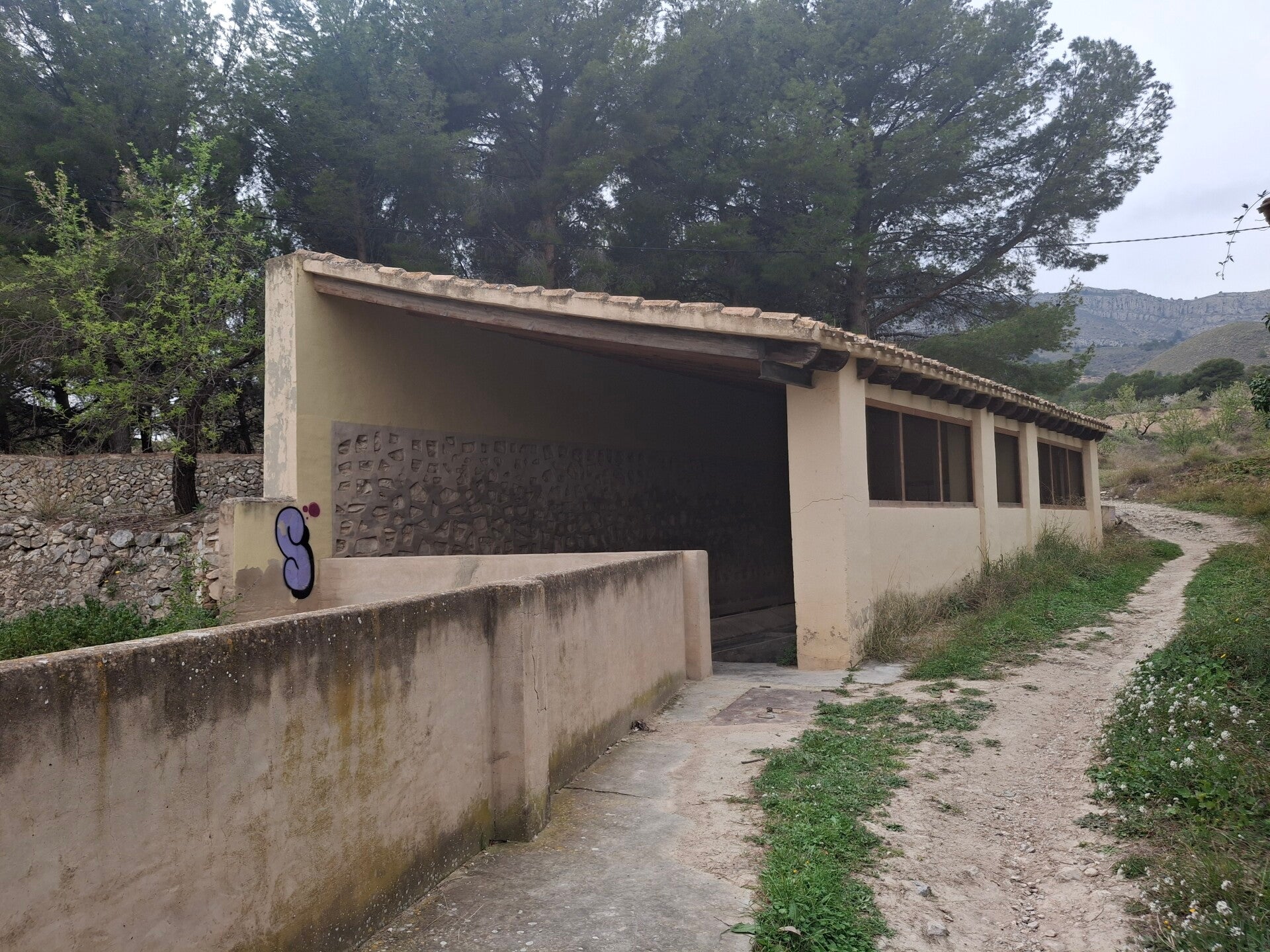
Just a gentle 15-minute walk from La Torreblai, the Spring of Alècua invites you to slow down and step into the living history of Jijona.
This humble spring has a surprisingly rich past. It was most likely fed by an underground aquifer replenished by melting winter snow — a natural cycle that became increasingly rare after the 1960s and gradually disappeared. Yet in its glory days, the spring was a vital lifeline. It supplied enough water to operate a communal washhouse while also feeding the old part of Jijona — including areas near Torreblai and the castle basin — and irrigating several square kilometers of fertile farmland.
Ingeniously, all of this worked without pumps. A carefully designed network of channels, tunnels, canals, and basins guided the water purely by gravity — a quiet masterpiece of traditional water engineering.
A Place Where Life Happened
Washhouses were once vibrant social hubs, especially for women, because washing clothes was a long and communal task.
At first light, women would arrive carrying esparto baskets filled with laundry. Clothes were first soaked, then scrubbed with homemade soap, and laid in the sun to help remove stains. This sun-bleaching process could take hours, requiring the garments to be re-moistened as they dried. Finally, everything was rinsed and left to dry in the open air.
Water reached the washhouse through an irrigation channel from the aquifer. Before arriving, it could pass through one or two settling tanks to remove stones and debris. Because the channel sat at a higher level, the water entered the first basin with force, then gradually slowed through a sequence of pools.
There was even a careful hygiene order:
-
First basin: white laundry
-
Second basin: colored clothes
-
Final basin (closest to the outlet): clothes from sick people or very dirty items
The Alècua washhouse was thoughtfully designed, with a roof for protection from sun and rain and a built-in bench where baskets and tools could rest — and where women could pause and talk.
From Arab Roots to Rural Lifeline
The traditional washing places of Jijona were typically located near natural springs such as Font d’Alècua, els Bassons, Font de Graü, and the Safareig de Segorb.
The Alècua spring itself was probably first developed during the Arab period, when the surrounding land was brought into cultivation. Throughout the Middle Ages and the Modern Age, the Alècua area functioned as productive irrigated farmland, and its waters helped sustain the town while nourishing nearby orchards.
By 1852, however, the spring began to show signs of exhaustion. Local irrigators even hired Pere Miquel — known as a “water diviner from Mallorca” — in an attempt to increase the flow.
A Quiet Place to Discover Today
Today, the Spring of Alècua only flows in very exceptional circumstances. The water you see in the fountain now arrives via a pipe connection from the Spring of Nutxes, the largest spring in Jijona.
And yet… the place still speaks.
The stone, the channels, the silence — they tell the story of how water once shaped daily life here.
If you are staying at La Torreblai, take the short walk and see it for yourself. It’s an easy, beautiful stroll — and one of those small local discoveries that quietly becomes a favorite memory.